AI coding tools used to be something I opened when I wanted help.
Now they are starting to become something I can leave running.
That shift is easy to underestimate.
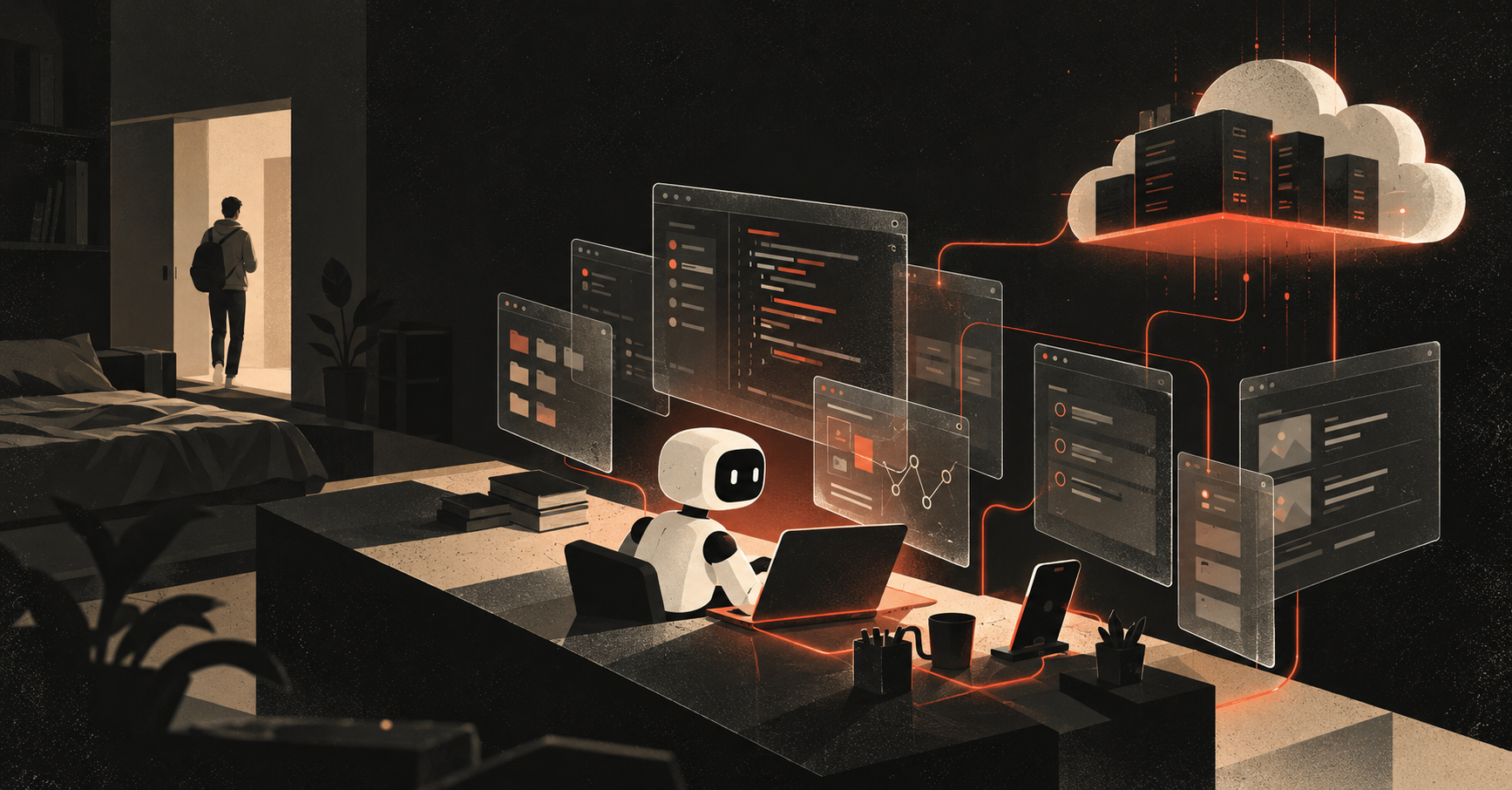
At OpenAI’s DevDay on September 29, the company introduced Dots, always-on AI agents designed to work toward goals continuously. Each Dot gets its own cloud computer and browser, can connect to more than 4,000 apps, and can continue working while you are doing something else.
The example that caught my attention was actually pretty simple.
A developer gets recurring bug reports. Instead of manually opening each issue, figuring out what changed, making a fix, running tests and creating a PR, the Dot can monitor the feedback, investigate patterns, build and test fixes, and bring back completed pull requests for review.
That sounds like a better coding assistant.
I think it is something slightly different.
It is an attempt to turn an AI agent into part of the development infrastructure.
Persistent Environments and Continuous Execution
At the same event, OpenAI also made Codex cloud environments persistent and reusable. Agents can now work in shared environments with approved settings and permissions instead of treating every task as a temporary remote sandbox. Codex can also continue code reviews and security scans while the developer is away.
That changes how I think about building with agents.
The old workflow was:
I have a task → I ask AI → AI helps me → I finish the task.
The new workflow is closer to:
I have a goal → I give an agent access → the agent keeps working → I review the results.
That is a much bigger change.
Agent + Environment > Model + Prompt
It also makes the surrounding infrastructure much more important.
If an agent is going to work for hours or days, it needs its own environment, permissions, credentials, memory, logs, tools and ways to communicate progress.
The model is only one part of the system.
And I think that's where AI development is heading.
“We're moving from model + prompt toward agent + environment.”
For developers, this could be incredibly useful.
Imagine starting a project and having separate agents continuously handling bug fixes, tests, documentation, dependency updates and security reviews while you focus on the parts that actually require your attention.
The Autonomy Trade-Off
But there is an obvious trade-off.
The more an agent can do without me, the more carefully I need to define what it is allowed to do.
OpenAI's own Dots documentation reflects this. Dots have configurable permissions, approval rules, activity monitoring and safeguards, and OpenAI explicitly says they can still make mistakes and that consequential work should be reviewed.
That part matters.
Because autonomy isn't just about making the model smarter.
It's about making the boundary around the model smarter.
A New Developer Paradigm
I don't think the interesting question anymore is:
“Can AI write my code?”
We already know it can.
The more interesting question is:
“What happens when I give it a computer and tell it to keep going?”
That's where AI stops feeling like a tool I use and starts feeling like another developer working alongside me.
And honestly, I'm not sure we've fully figured out what that means yet.